If you have seen winged insects near a window, or found a thin line of dried mud on your foundation, you may be wondering whether you have the termites Dallas homeowners hear so much about. The signs can be small, and many of them look like something harmless. This guide shows you how to tell termite swarmers from flying ants, which signs point to an active problem, and what to do next. You only need a flashlight and a few minutes of careful looking. If what you find worries you, an inspection is the only way to know for sure.
Why Termites Dallas Homeowners Find Are Easy to Miss
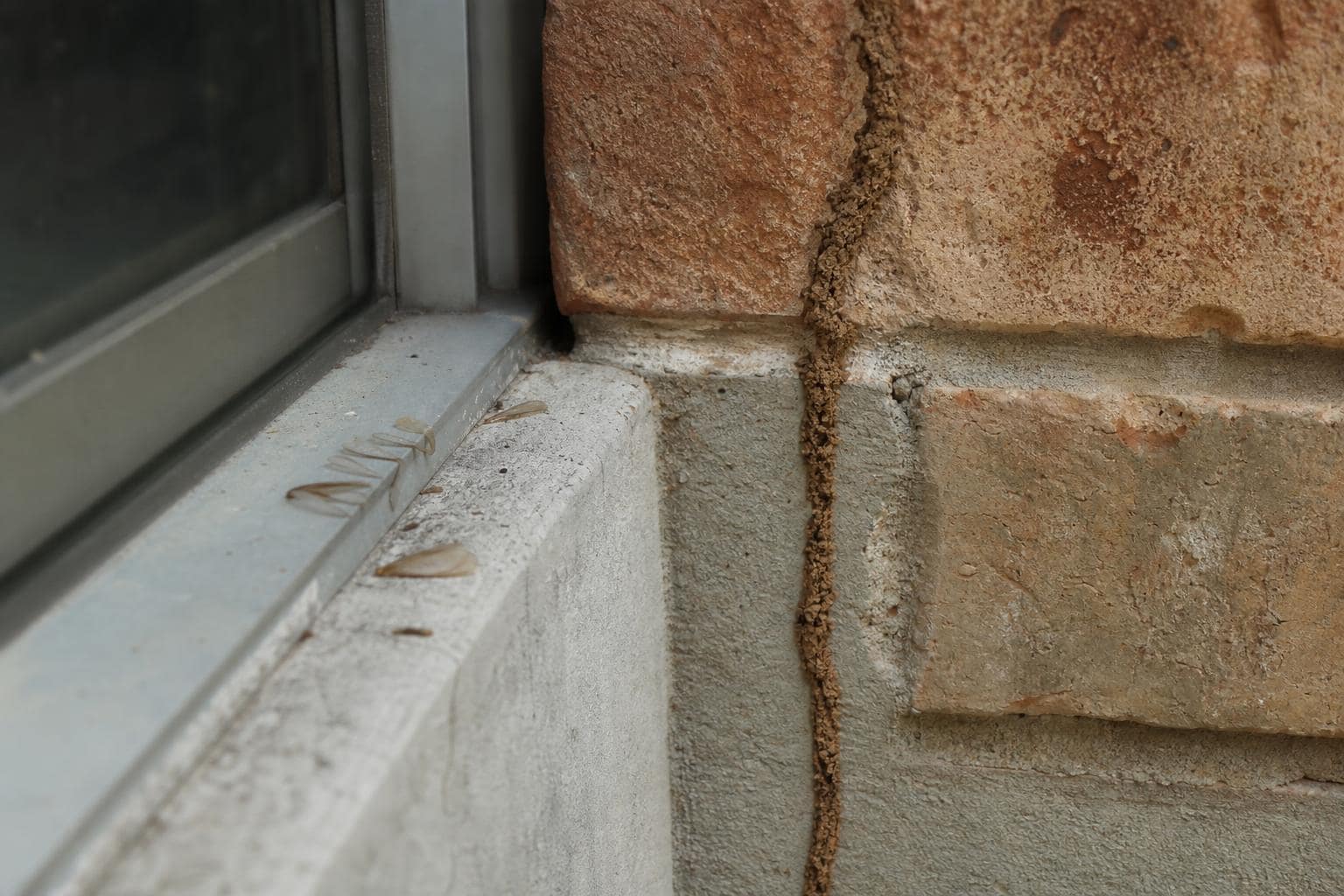
Termites work out of sight. Subterranean termites travel through the soil and build small mud tubes to reach the wood in your home. Once inside, they feed in places you rarely look, such as wall framing, subfloors and crawl spaces. By the time damage shows on the surface, a colony may have been feeding for a while.
That is why small clues matter when you look for termites Dallas homes may be hiding. Some show up outside, some inside, and some only when you check the garage, attic or crawl space. You can read more about what termites are and how they feed on our termite page and in our termite FAQ.
How to Tell Termite Swarmers From Flying Ants
Swarmers are winged termites that leave a colony to start a new one. They are often the first thing a homeowner notices. Seeing a group of them indoors is a good reason to take a closer look, because it can mean a colony is nearby. Flying ants look similar at a glance, so check three things:
- Wings. Termite swarmers have two pairs of wings that are about the same length. Flying ants have front wings that are longer than the back wings.
- Antennae. Termite antennae are straight, like a short string of tiny beads. Ant antennae bend at an elbow.
- Waist. A termite body looks thick and straight, with no narrow, pinched waist. An ant has a clearly pinched waist between the middle and the back of its body.
If you can, catch a few in a sealed container or take a clear, close photo. Swarmers also shed their wings after they land, so small piles of thin, see-through wings on window sills, near doors or under light fixtures are worth noting too. If it turns out you have ants instead, our ant control page covers that problem.
Other Signs of Termites Dallas Homes Can Show
Swarmers are only one clue. These are the other common signs of termites Dallas homeowners should watch for, and each one is worth a photo and a note of where you saw it.
Mud tubes
Subterranean termites build tubes of dried mud where the ground meets your home. They are often about as wide as a pencil, and they may curve or branch. Look along the foundation, inside the garage, and in the crawl space if you can reach it.
Hollow-sounding wood and grooves
Tap baseboards, door frames and window sills with your knuckle. Wood that sounds hollow or feels soft is a warning sign. Termites can also leave long, curly grooves in wood as they chew. On wood floors, look for blisters or buckling that looks like water damage when you have had no plumbing problems.
Frass (termite droppings)
Drywood termites tunnel inside wood and push their droppings out through tiny holes. This material, called frass, collects in small mounds of pellets that look like sawdust or coffee grounds. A small pile under a wooden beam or window frame is worth reporting.
Shed wings
Wings left behind after a swarm are a sign that swarmers were in the area. Collect a few and keep them with your photos.
One sign does not prove a problem on its own. Some marks can be left from past activity, which is one reason a trained inspector checks whether termites are still active.
Termites Dallas Homeowners Suspect: What to Do Next
If you think you have found termites, these steps help you and the inspector:
- Leave the evidence in place. Do not knock down mud tubes or tear open wood. The inspector needs to see what you saw.
- Take clear photos. Place a pencil or ruler next to the sign so the size is easy to see.
- Save a few insects. A sealed container or a piece of clear tape works well.
- Write down where and when. Note the room, the date and the time of day you saw swarmers.
- Look for moisture. Leaky pipes, clogged gutters and wet soil next to the foundation can draw termites. Note any you find.
Termite Control Dallas TX: When to Call a Professional
Call as soon as you see swarmers inside the house, mud tubes, hollow-sounding wood or frass. Call too if you are simply not sure what you found. A short conversation can tell you whether what you saw is a termite Dallas TX problem or something else. A trained inspector can identify the insect, look in places you cannot reach, and explain what was found.
In Texas, the Structural Pest Control Service at the Texas Department of Agriculture licenses and regulates pest management professionals who apply pesticides in and around structures.
Miss Phoebe’s offers termite control Dallas TX homeowners can ask about, from inspection to treatment, and serves homes across the Dallas-Fort Worth area. If an inspection finds active termites, you can read about the Termidor and Trelona treatments on our site before you decide anything.
Questions About Termites Dallas Homes Have? Call Us
Found wings, mud or hollow wood? Call Miss Phoebe’s at (214) 357-7373 or request a free inspection. You can also reach us through our contact page. Our office is at 10132 Monroe Drive, Suite B, Dallas, TX 75229, and we are open Monday to Friday from 8am to 5pm and Saturday from 8am to 1pm.